
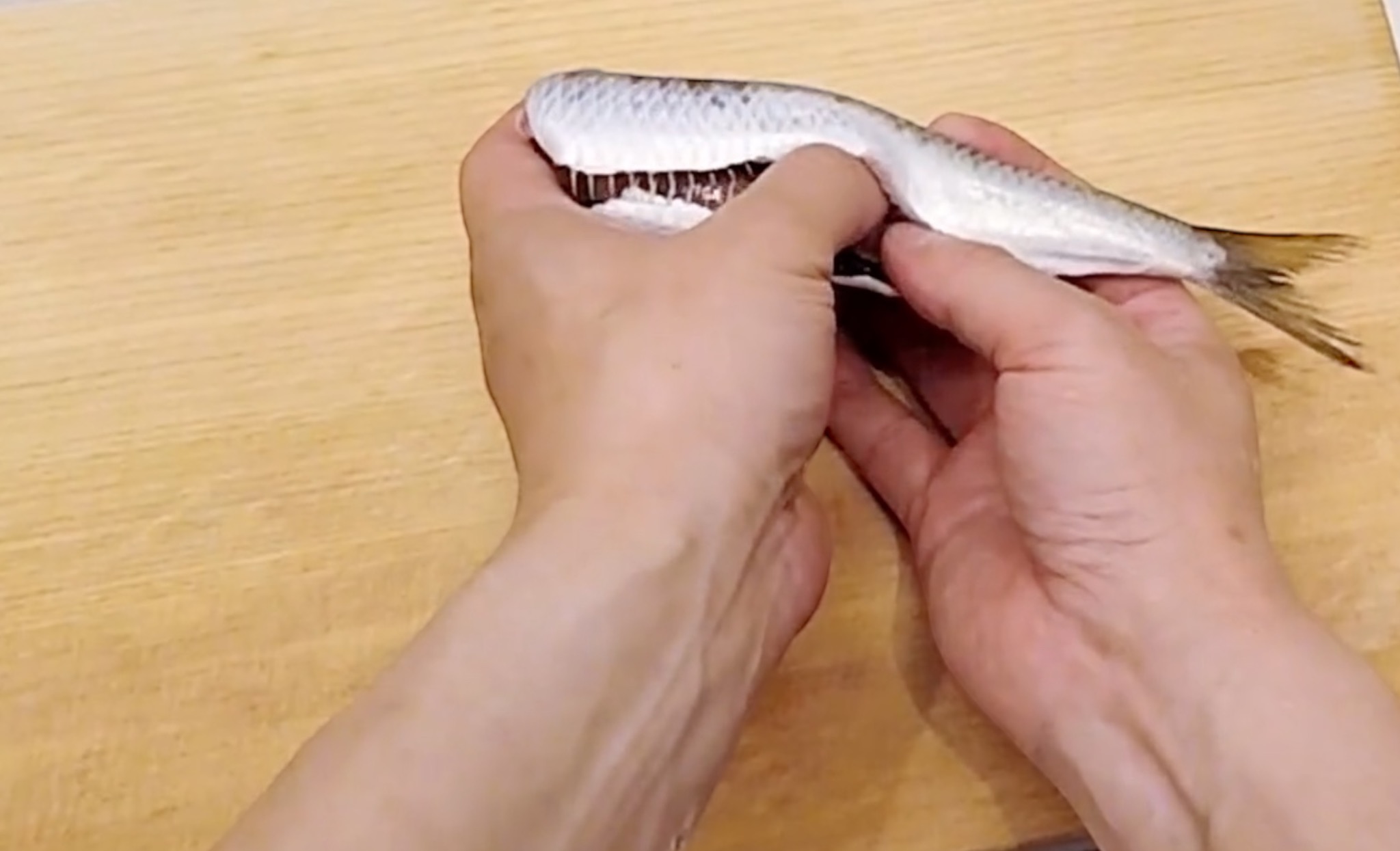
Tebiraki is a traditional Japanese technique for preparing sardines by opening the fish with your hands instead of using a knife. While most fish in Japanese cuisine are filleted into three pieces with a knife, sardines are a little different. Because their flesh is so tender, they can be prepared entirely by hand.
Sardines are one of the most widely eaten fish in the world. While many countries enjoy them grilled, canned, or preserved, Japan has developed a unique tradition of preparing them fresh—even by opening them with nothing more than your hands.
The appeal of tebiraki goes beyond its simplicity. When sardines are filleted with a knife, small rib bones often remain attached to the flesh and need to be removed separately. With tebiraki, however, the backbone, belly bones, and many of the fine rib bones come away together, making it easier to prepare the fish neatly. The skin also peels off easily by hand, making this an approachable technique even for people who have never cleaned a fish before.
Although sardines are available year-round, they are at their best during their peak season, when they become rich in fat and their flesh is especially soft. This is the perfect time to try tebiraki, as the fish is even easier to open by hand.
Once prepared, the sardines can be enjoyed as sashimi if they are extremely fresh. Another favorite method is to lightly sear the skin side with a kitchen torch or under a broiler. A sprinkle of salt, served with seasonal vegetables such as cucumber and myōga (Japanese ginger flower buds), and dipped in a simple ginger-soy sauce, creates a refreshing summer dish that beautifully balances the rich flavor of the sardines with the bright aroma of the garnishes.
If you’ve always thought preparing fish was difficult, tebiraki is a wonderful place to start. With no knife required, it’s a simple, satisfying technique that lets you enjoy one of Japan’s most beloved seasonal fish at its freshest.