
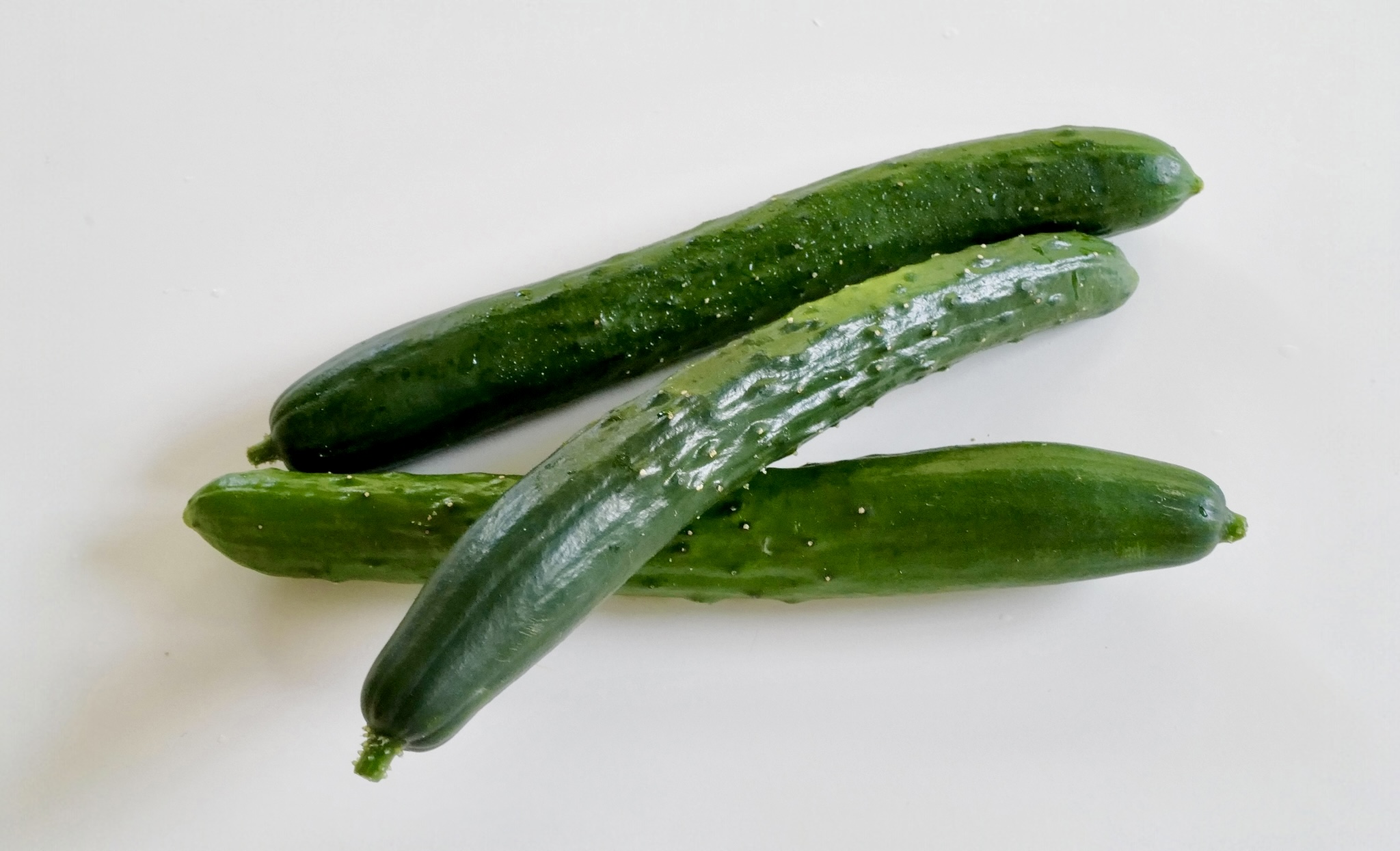
Cucumber has a surprisingly long history in Japan. It is believed to have been introduced from China by the ”Kentōshi,” the Japanese diplomatic missions that traveled to Tang China between the 7th and 9th centuries. Yet despite its early arrival, cucumbers did not become an everyday vegetable until the late Edo period (the mid-1800s) and the beginning of the Meiji era (late 19th century). Before then, they were not especially popular.
Even ”Kaibara Ekiken,” a renowned Japanese herbalist and scholar of the Edo period, wrote that cucumbers were “not particularly delicious.” At the time, people often ate them after they had fully ripened and turned yellow rather than harvesting them while they were still young and green, as we do today.
Although cucumbers are most often eaten raw, they are surprisingly versatile in Japanese cooking. One of my favorite preparations is midori-zu (“green vinegar”) or hisui-zu (“jade vinegar”). This refreshing sauce is made by grating fresh cucumber and combining it with sweetened rice vinegar. Its delicate flavor pairs beautifully with mild fish such as horse mackerel (aji) or white-fleshed fish, while its vibrant green color adds a refreshing touch to summer dishes.
Cucumbers are also excellent when lightly stir-fried—a preparation that may surprise many people outside Japan. The secret is not to overcook them. They should remain slightly crisp, retaining their fresh texture. Stir-fried with pork or beef and seasoned simply with soy sauce and mirin (a lightly sweet Japanese rice seasoning), cucumbers become a delicious accompaniment to steamed rice.
Another interesting characteristic of cucumbers is how quickly they grow. If they are left on the vine for just a little too long, they become noticeably larger. In Japan, cucumbers are typically harvested when they are about 2–3 cm (around 1 inch) in diameter. I believe the smaller Japanese size offers the best balance of crisp texture and refreshing juiciness.
Tiny cucumbers are harvested while the bright yellow blossom is still attached. In Japanese restaurants, they are sometimes used as a garnish for sashimi or as a seasonal decorative element on the plate. Though small, they beautifully express the seasonality and attention to detail that are hallmarks of Japanese cuisine.