
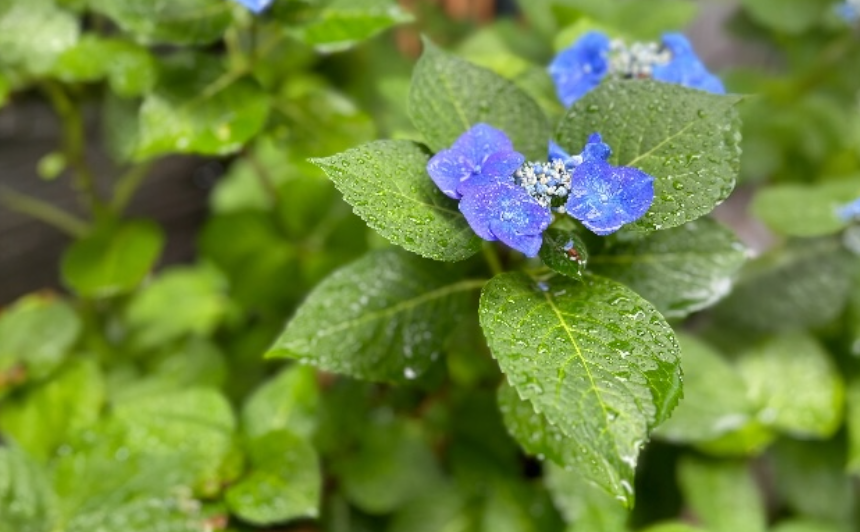
Around the time when hydrangeas are beautifully covered with the gentle rain of Japan’s rainy season, nature is quietly preparing one of the year’s best seafood treats.
The rainy season is essential for growing crops, but it also has a remarkable effect on the sea. This time, I’d like to introduce one of the fish that reaches its peak during this season: ”aji,” or Japanese horse mackerel.
You may have seen this fish at Japanese restaurants or seafood markets, but there’s a reason why it tastes especially good at this time of year.
How Japan’s Mountains Help Create Delicious Aji
Aji (Japanese horse mackerel) is available in Japan throughout the year, but like many seasonal ingredients in Japanese cuisine, it has a peak season.
In fact, there’s even a special name for it: ”tsuyu aji,” meaning “rainy season aji.”
Why does it become so delicious during the rainy season?
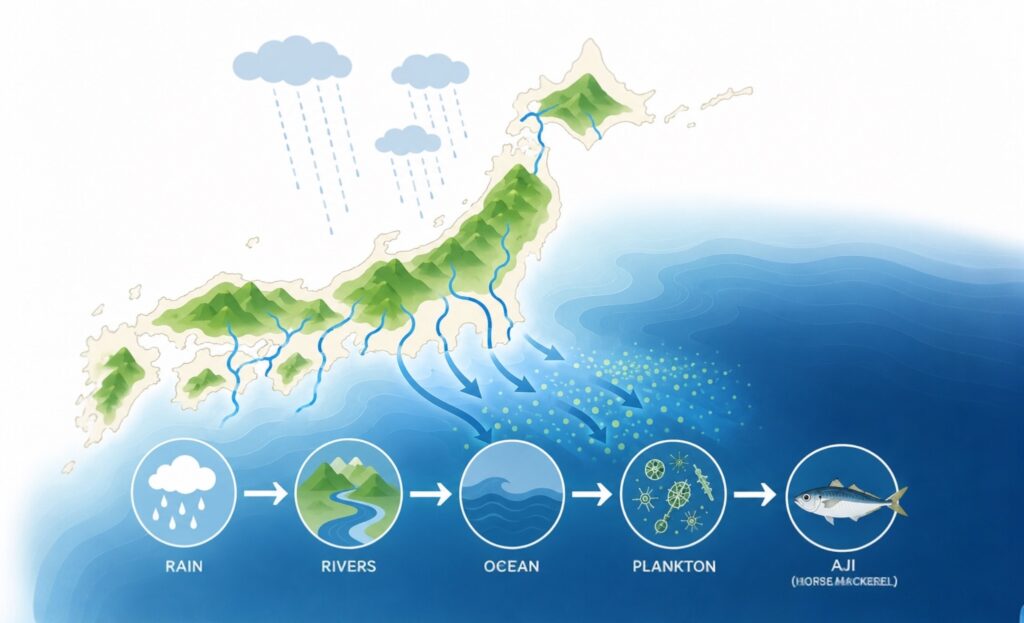
If you look at a map of Japan, you’ll notice that it is an island nation surrounded by the sea, with mountains covering much of its landscape. This unique geography allows rainwater to flow quickly from the mountains into rivers and then out to the ocean.
Heavy seasonal rains carry nutrients from the land down to the sea. These nutrients encourage the growth of plankton, which becomes food for aji living in bays and coastal waters. As the fish feed on this abundance of plankton, they develop a richer layer of fat and a deeper flavor.
In other words, the long rains help create one of the tastiest seasons for aji.
The Many Names of Rain in Japan
When people hear the words “Japan’s rainy season,” they usually think of June.
However, Japanese actually has several traditional names for rainy periods that occur during the transitions between seasons.
For example:
- Nanatane-tsuyu (“rapeseed rains”) refers to the rainy spell between winter and spring.
- Shūrin refers to the prolonged rains between summer and autumn, caused by the autumn rain front.
- Sazanka-tsuyu (“camellia rains”) describes the rainy period between autumn and winter.
These traditional names reflect Japan’s close observation of seasonal changes and the way weather influences everyday life and food.
The term tsuyu aji reminds us that seasonal rains do more than change the landscape—they also help shape the flavor of seasonal seafood.
Among these rainy periods, however, the aji caught during the early summer rainy season is considered the finest. Around this time of year, when I visit the Toyosu Fish Market in Tokyo, I often see outstanding fish on display—some so beautiful that they stop me in my tracks.
The Best Way to Enjoy Aji
If you ask me how to enjoy fresh aji, my answer is simple: ”aji no tataki.”
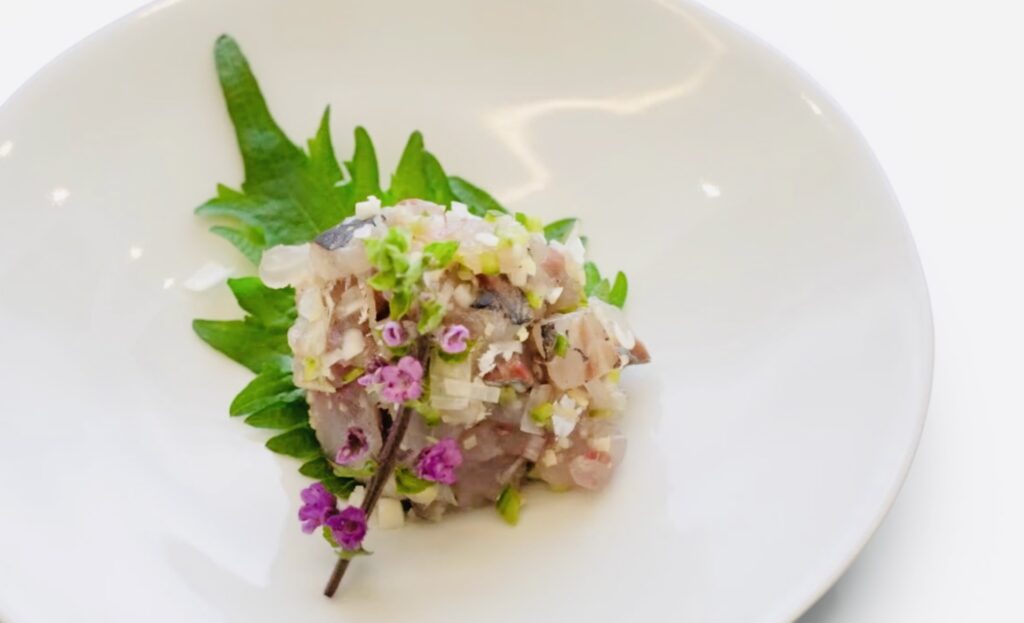
Aji no tataki is a traditional Japanese dish made by finely chopping very fresh raw aji and mixing it with aromatic ingredients such as ginger, scallions, and other seasonings. Unlike seared tuna, the word tataki here refers to the chopping technique rather than lightly grilling the fish.
One of the greatest pleasures of learning to prepare fish yourself is being able to enjoy it at its absolute freshest.
Large fish such as sea bream are often aged after filleting to develop a deeper flavor. Smaller fish like aji and sardines are different. Their delicate fat is at its best when the fish is as fresh as possible.
Once a fish has been filleted, its fat gradually begins to oxidize, causing its flavor to deteriorate. By purchasing a whole fish and filleting it yourself just before serving, you can enjoy sashimi or tataki at its peak.
For me, this is one of the greatest rewards of learning how to prepare fish.
How to Choose the Best Aji
When selecting aji, look for fish that are both fresh and well-fed. There are three simple things to check.
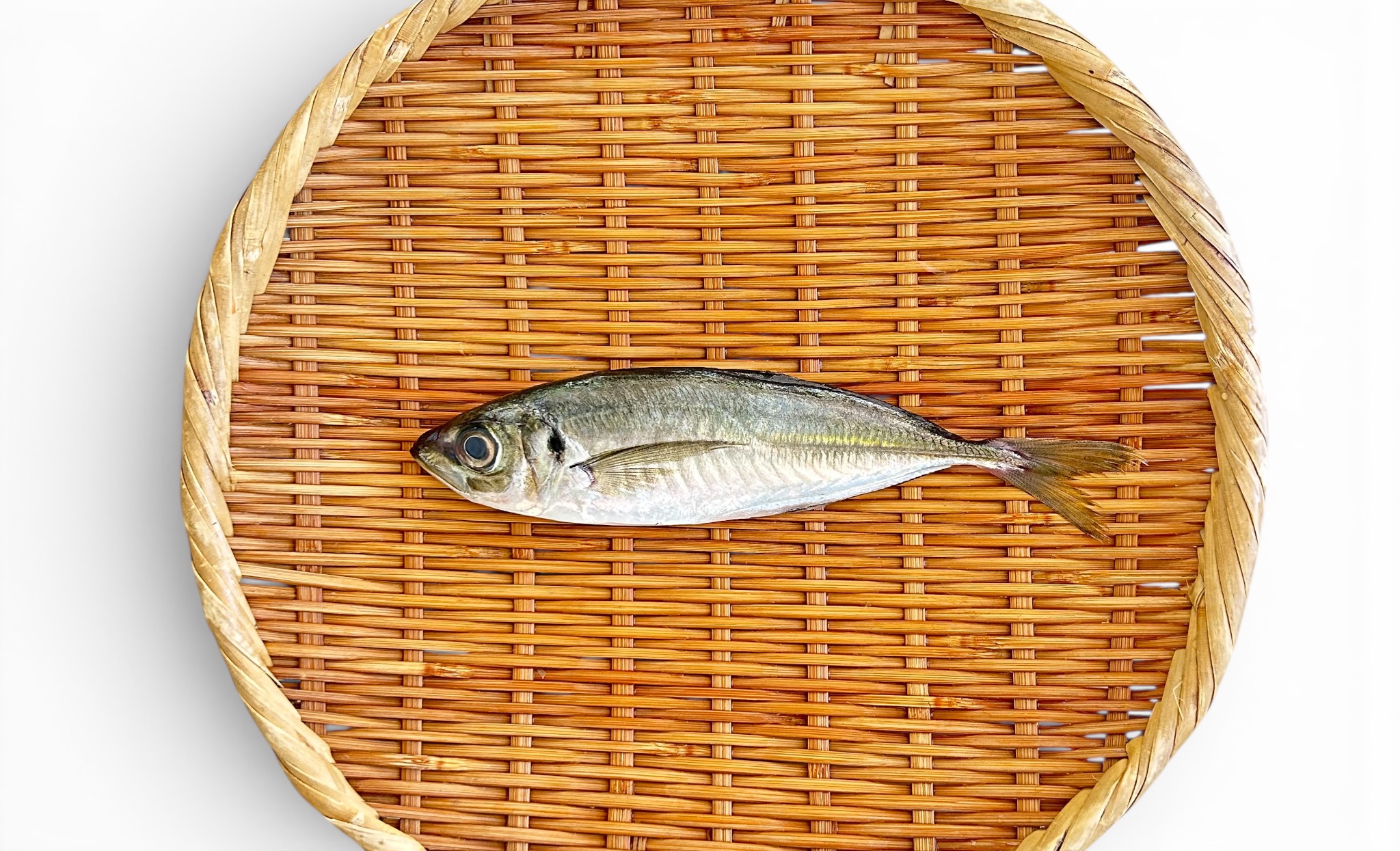
First, look at the color. High-quality coastal aji—known in Japan as ”setsuki aji”—often have a subtle golden sheen on their sides, a sign that they have developed plenty of fat.
Second, look at the body shape. Fish with a deeper, broader body (measured from the back to the belly) generally contain more fat than slender fish.
Third, look at the eyes. Fresh aji should have bright, clear, slightly bulging eyes. Cloudy or sunken eyes are signs that the fish is no longer at its best.
For my cooking classes, I personally select every aji at the morning market. Even within the same box, some fish are noticeably fuller than others. Choosing each fish carefully is part of the work of a chef.
By handling truly fresh fish themselves, my students gradually learn how to judge quality with their own eyes—a skill that becomes more valuable every time they visit a fish market.
A Unique Kinsaryu Style of Aji no Tataki
One distinctive feature of the Kinsaryu School’s aji no tataki is the addition of green bell pepper.
This may come as a surprise even in Japanese cuisine, where bell peppers are not typically paired with raw fish.
However, the fresh, slightly grassy aroma of the bell pepper balances the fish’s stronger flavors, while the fish softens the pepper’s own raw, green notes. Rather than competing with each other, the two ingredients cancel out each other’s less desirable characteristics, allowing their natural freshness to shine.
This is one of the aspects of cooking that I find most fascinating.
Great cooking is not simply about layering more flavors together. Sometimes, the most effective combinations are those in which different ingredients complement one another by softening each other’s stronger characteristics. When that balance is achieved, the true flavor of each ingredient becomes even more enjoyable.
Finding these unexpected pairings is one of the greatest pleasures of cooking.
If you visit a supermarket or fish market during Japan’s rainy season, take a moment to look closely at the aji on display. Learning to choose a good fish begins simply by observing.
I hope you’ll enjoy discovering one of the delicious gifts that Japan’s seasons have to offer.