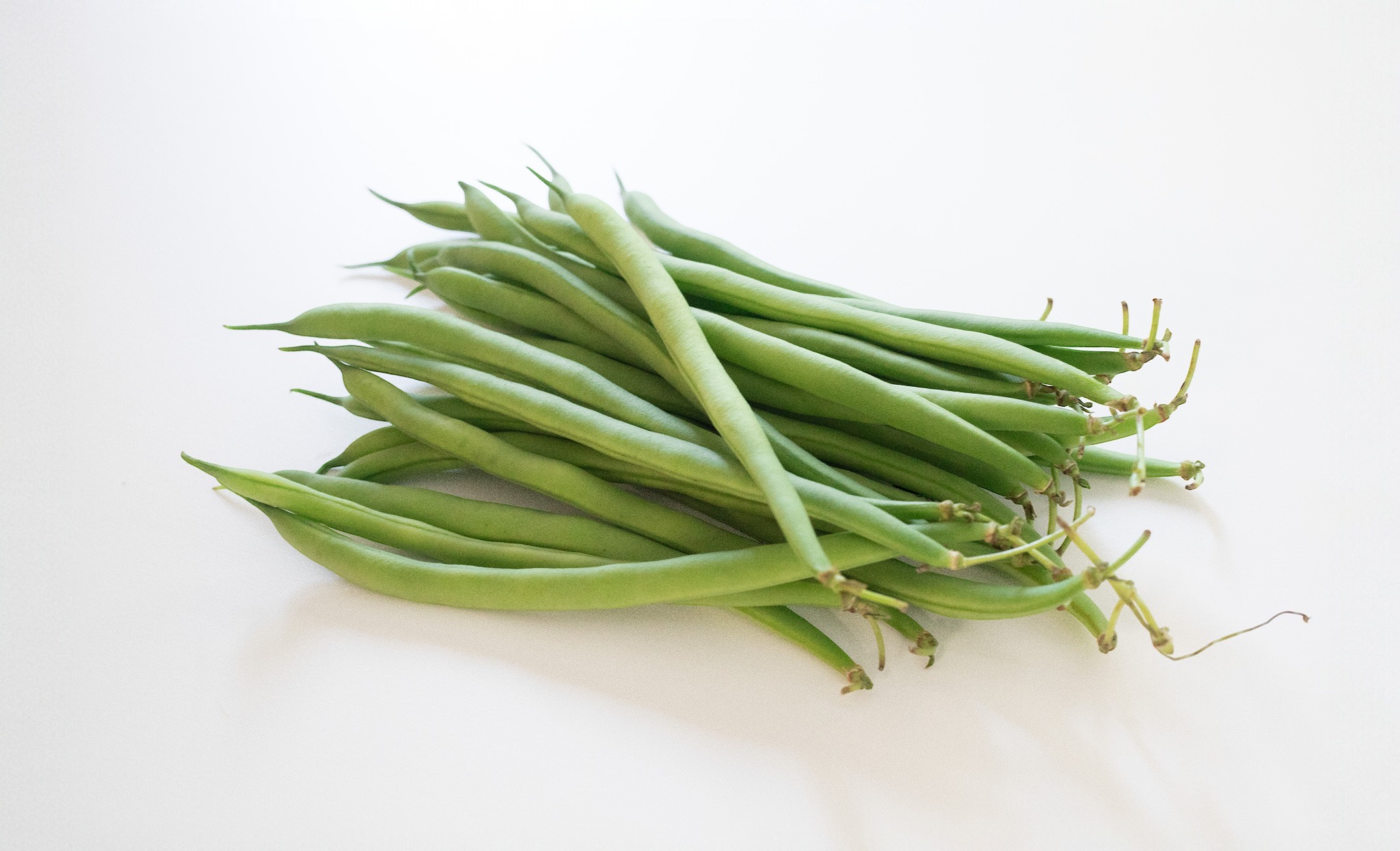
Green beans (”ingen”) are said to have been brought to Japan from China during the Edo period by Ingen Zenji, the Buddhist monk who introduced the culture of ”sencha” tea to Japan. In fact, the vegetable itself is believed to have taken its Japanese name from him.
In Japanese cooking, green beans are often served alongside simmered dishes or dressed with sesame sauce (”goma-ae”).
The key to cooking green beans well is the boiling time, since their flavor and texture change dramatically depending on how they are cooked. If overcooked, they lose their crisp texture, while undercooking leaves a raw, grassy flavor. When cooked just right, green beans develop their distinctive snap and fresh aroma. The best way to judge doneness is to taste them while cooking.
Before boiling, trim off the stem ends and add a pinch of salt to a pot of boiling water. Green beans also have very fine fuzz on their surface, so while boiling, it helps to gently move them around with chopsticks, almost as if letting them “swim” in the water. This prevents air from getting trapped around the fuzz and helps them cook more evenly.
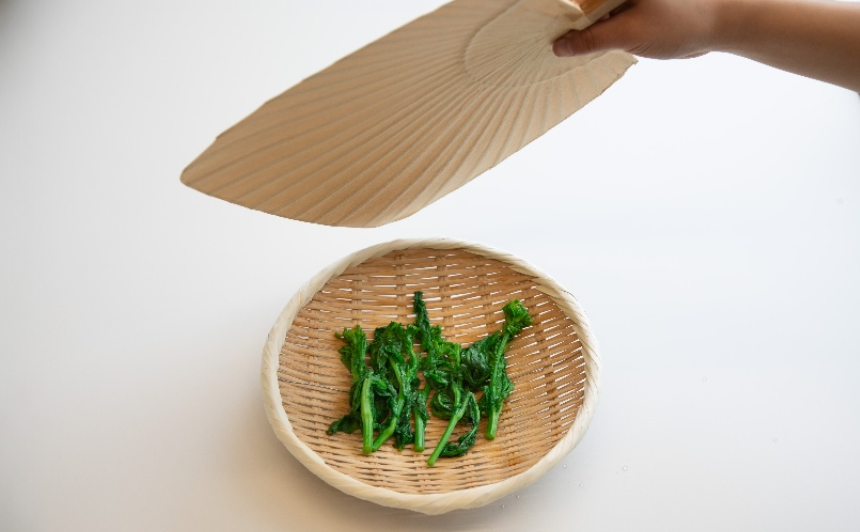
Another important point—especially when using green beans in dressed dishes (”aemono”)—is how they are cooled after boiling. In Japanese cooking, a technique called “kiage”※ is often used. Instead of shocking the beans in cold water, they are drained in a colander and allowed to cool naturally. This prevents them from absorbing excess moisture, which can make dressed dishes watery and dilute the flavor. It is one of the subtle techniques in Japanese cuisine that helps preserve both texture and flavor.
The tips of green beans can also vary depending on the variety. Some remain tough even after cooking, so it is important to taste and judge them individually. If the tips are still fibrous after boiling, it is perfectly fine to trim them off. If they are tender, however, leaving them attached creates a more elegant presentation and gives the dish a more natural “green bean” appearance.