
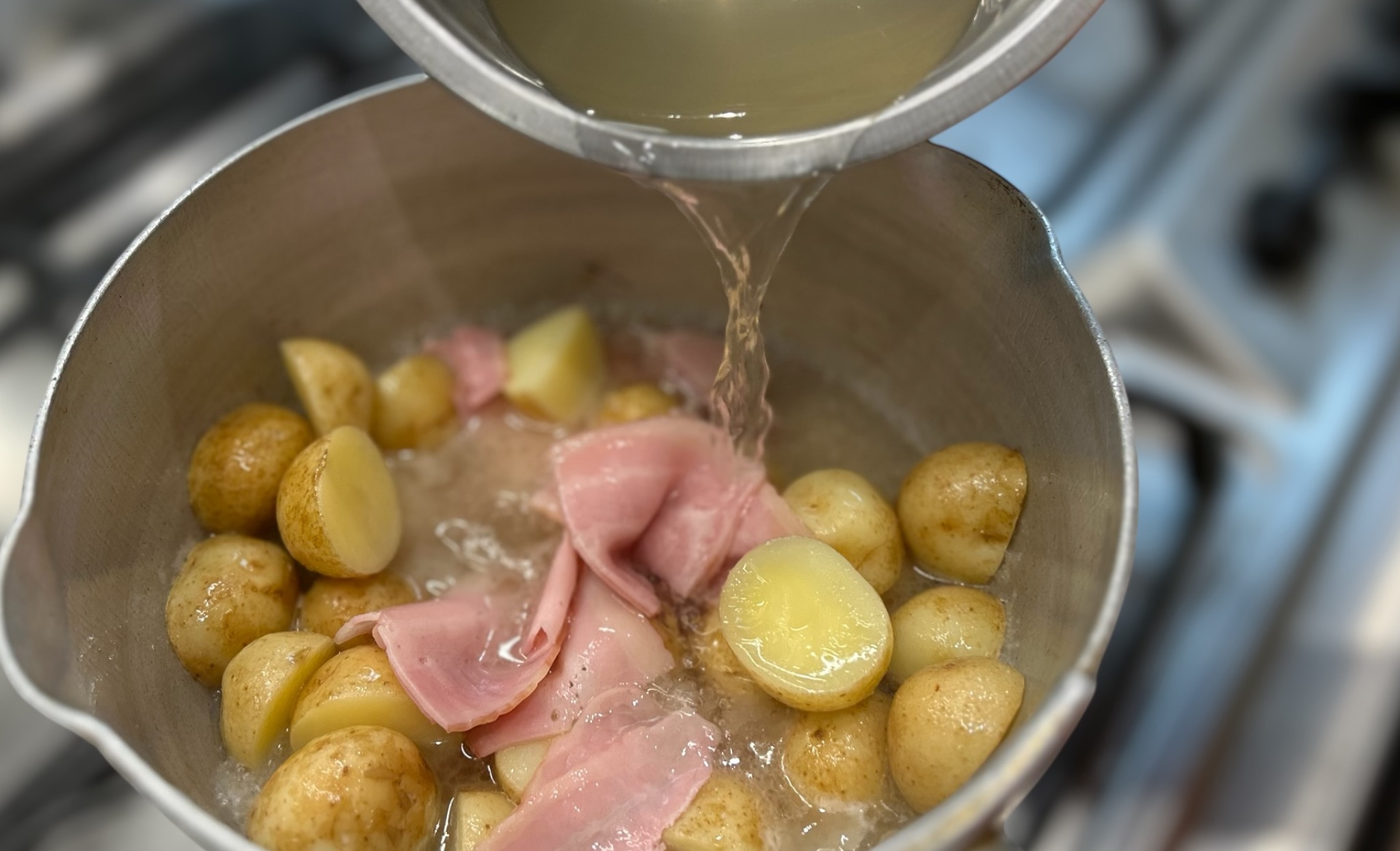
Itame-ni is a Japanese cooking method in which ingredients are first sautéed in oil and then simmered in dashi broth. Traditionally in Japanese cooking, the more common approach was to first parboil the ingredients and then transfer them to seasoned broth to slowly absorb flavor. In recent years, however, the growing need for quicker cooking and the widespread use of frying pans have made the “sauté first, then simmer” method increasingly common.
Sautéing helps remove surface moisture from the ingredients, allowing the oil to coat them more easily. The oil then transfers heat efficiently while also carrying the richness, aroma, and savory flavors from ingredients such as meat into the food itself. After that, seasonings such as dashi, soy sauce, and mirin are added and simmered together, allowing the flavors to soak into the ingredients along with the liquid. This helps develop rich flavor in a relatively short amount of time.
For example, when using new potatoes, which are high in moisture and quite delicate, sautéing them first helps prevent them from falling apart while still keeping their soft, fluffy texture. Adding bacon, beef, or pork also allows the richness and aroma of the fat to spread throughout the potatoes.
On the other hand, the traditional method of “parboiling first, then simmering” has its own advantages. It removes bitterness and excess fat, resulting in a cleaner and more delicate flavor. In other words, deciding whether to use hot water or oil first depends on the nature of the ingredient and the kind of flavor you want to create.
Itame-ni is a practical cooking technique that suits the modern kitchen well, allowing rich and satisfying flavors to develop even within a limited amount of time.