
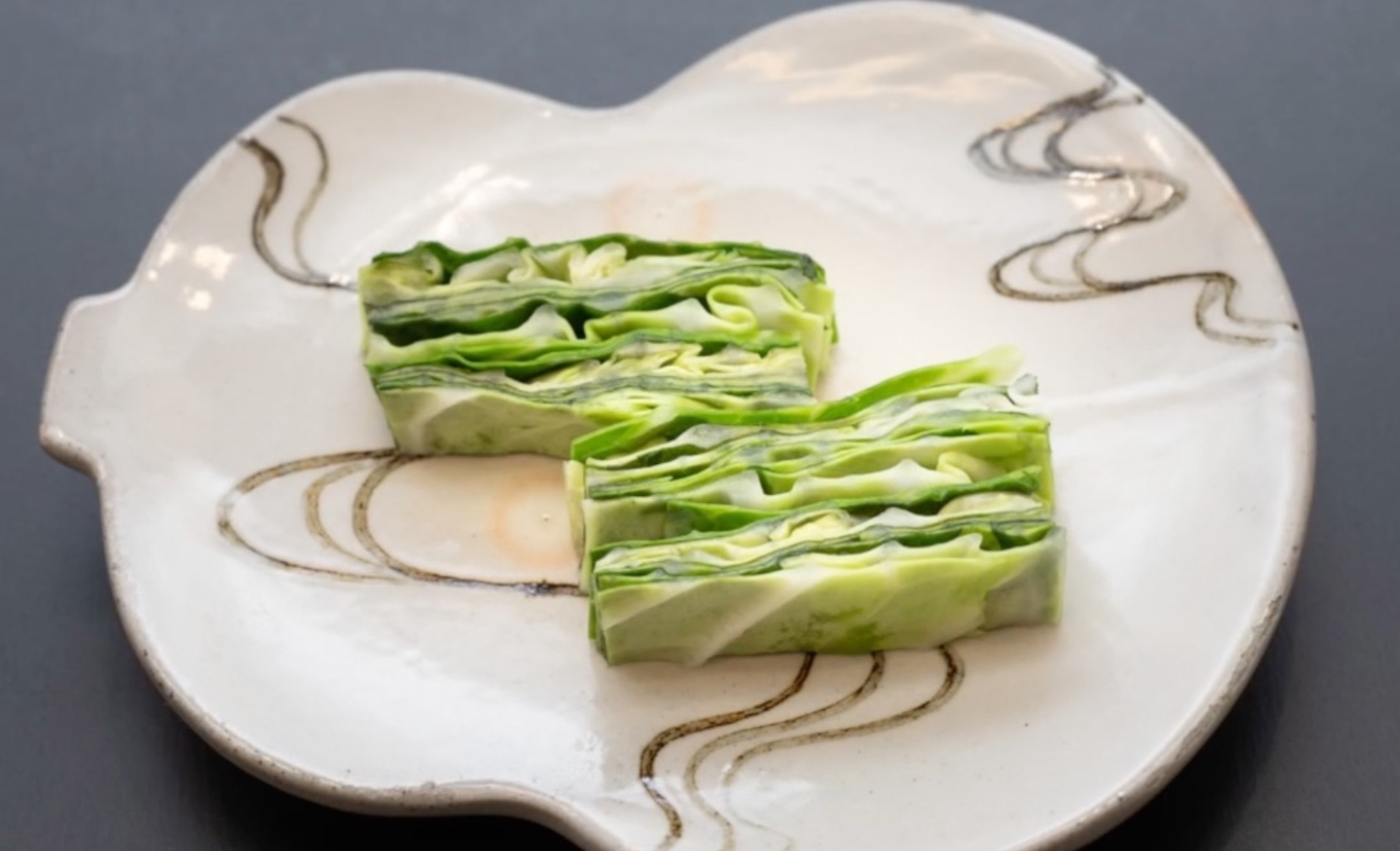
Hakata-zuke is a Japanese pickle made by layering cabbage and green shiso leaves. Its name comes from the beautiful pattern revealed when the pickle is sliced: the alternating layers of pale cabbage and green shiso are said to resemble the striped design of a traditional ”Hakata-ori obi,” a woven sash from Hakata.
To make Hakata-zuke, you will need two small trays of the same size, two cabbage leaves, and sixteen green shiso leaves.
Place a cabbage leaf in one of the trays and sprinkle it lightly with salt. Layer the shiso leaves on top, followed by more cabbage and another light sprinkling of salt. Continue layering the cabbage and shiso in this way, as if making a sandwich, until you have four layers of shiso.
Place the second tray on top and weigh it down. Leave it for about 20 to 30 minutes, allowing the cabbage and shiso to soften and settle together.
One important point when layering the cabbage is to press it gently with your fingertips. Lightly crushing the crisp fibers as you go helps the cabbage and shiso bind together. It also keeps the layers from falling apart when sliced, creating a neat and beautiful cross-section.
The pleasure of Hakata-zuke lies not only in its flavor, but also in its appearance. The delicate layers of pale cabbage and vivid green shiso create a beautiful pattern that is as enjoyable to look at as it is to eat.
Hakata-zuke makes a lovely accompaniment to rice bowls and is equally delicious served simply alongside a bowl of freshly cooked white rice.