
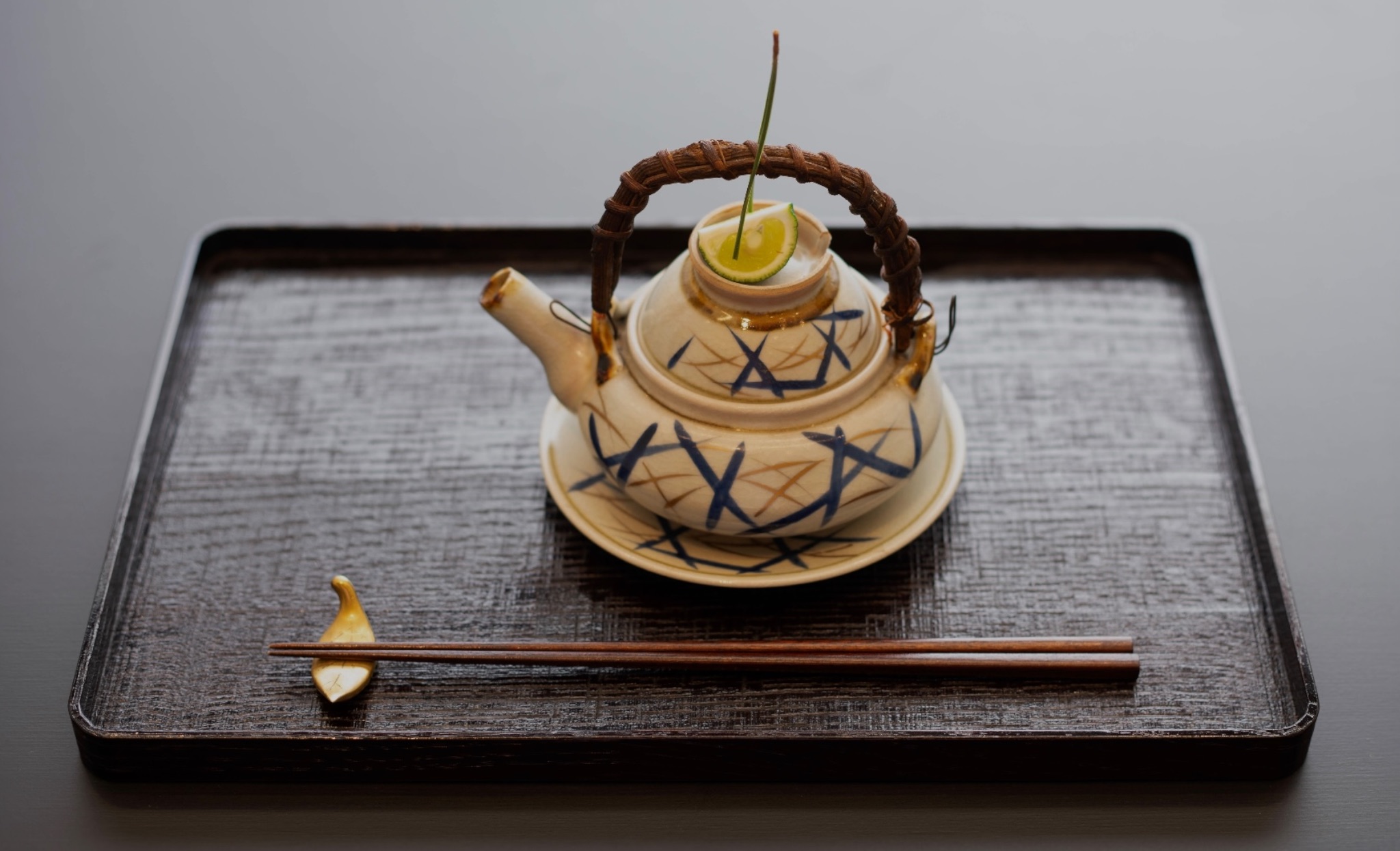
“Dobin-mushi” is one of the dishes that evokes the atmosphere of autumn in Japan. It is traditionally prepared during matsutake mushroom season. Its origins are said to go back to people who worked in the mountains and carried earthenware teapots, or ”dobin,” with them, filled with water or sake. They would add mushrooms gathered in the mountains to the sake and heat the pot directly over a fire. It is said that tea masters later refined this simple preparation into the elegant dish we know today.
When we think of dobin-mushi, we naturally think of matsutake. Matsutake can also be enjoyed in a clear soup served in a lidded bowl, but preparing it in a dobin creates a distinctly different aroma and flavor. Dashi is poured into the pot, along with matsutake and ingredients such as chicken, shrimp, and ginkgo nuts. Sake is added, and the dobin is placed directly over the heat. As the ingredients cook, their aromas are captured inside the pot, creating a richness and fragrance quite different from soup served in a regular bowl.
There is also a particular way to enjoy dobin-mushi. A dobin is served with a small sake cup on top. The broth is first poured into the cup and sipped slowly, almost as though drinking sake. You can then enjoy the ingredients from inside the pot, alternating between bites of the ingredients and sips of the fragrant broth. This way of eating is itself part of the charm of dobin-mushi, giving it a character quite different from a clear soup served in a conventional bowl.
With its fragrant matsutake and warm, delicate dashi, dobin-mushi is a dish to be savored slowly. On a long autumn evening, we hope you will enjoy it together with a cup of sake.