
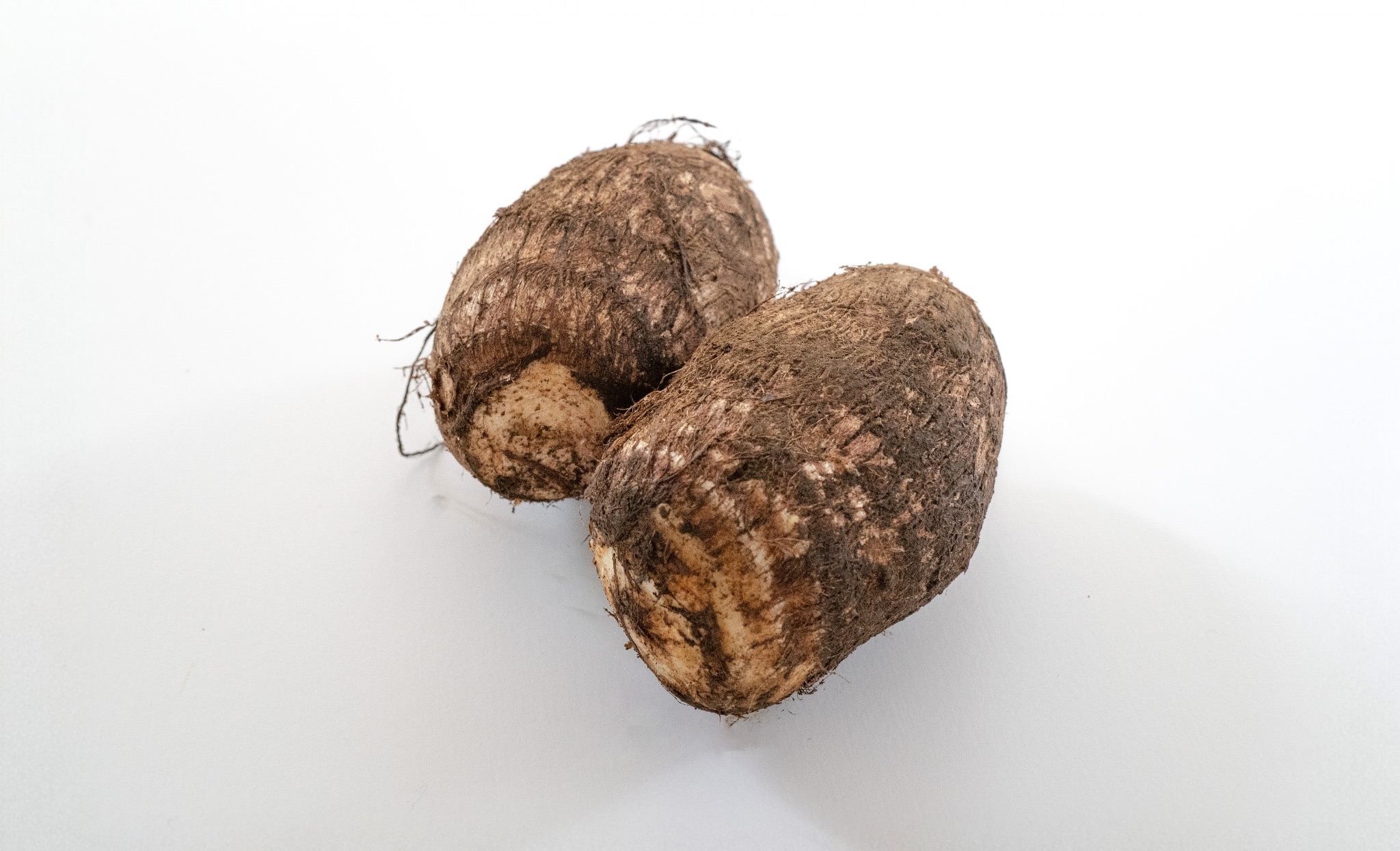
Satoimo, or Japanese taro, is an important ingredient in Japanese cuisine. It has been eaten in Japan for much longer than familiar potatoes such as white potatoes and sweet potatoes, and often appears in regional dishes and foods prepared for seasonal celebrations.
Originally from Southeast Asia, satoimo is believed to have been eaten in Japan even before rice cultivation became widespread. The name “satoimo” literally means “village potato.” It is said to have been named in contrast to yamaimo, or mountain yam, which grows naturally in the mountains: satoimo was the “imo” cultivated in the “sato,” the areas where people lived.
One interesting characteristic of satoimo is the way it grows. Smaller corms, called “koimo,” form around the parent corm, followed by another generation called “magoimo.” Because one corm produces many more, satoimo came to symbolize the prosperity and continuation of the family. For this reason, it has long been considered an auspicious food and is often served at New Year and other celebratory occasions.
When choosing satoimo, look for ones that still have some soil on their skins. After washing off the soil and peeling them, the key to preparing satoimo is how you handle their characteristic sliminess.
If too much of this sliminess remains, seasonings may not penetrate the satoimo as well. In Japanese cooking, peeled satoimo may be soaked briefly in alum water or rubbed with salt to remove some of it. Another traditional technique is to parboil them in the cloudy water left from rinsing rice, which helps control the sliminess as they cook.
Once parboiled, the satoimo can be transferred to dashi and gently simmered with seasonings such as soy sauce, mirin, and sugar—a simple and delicious way to enjoy this autumn ingredient.