
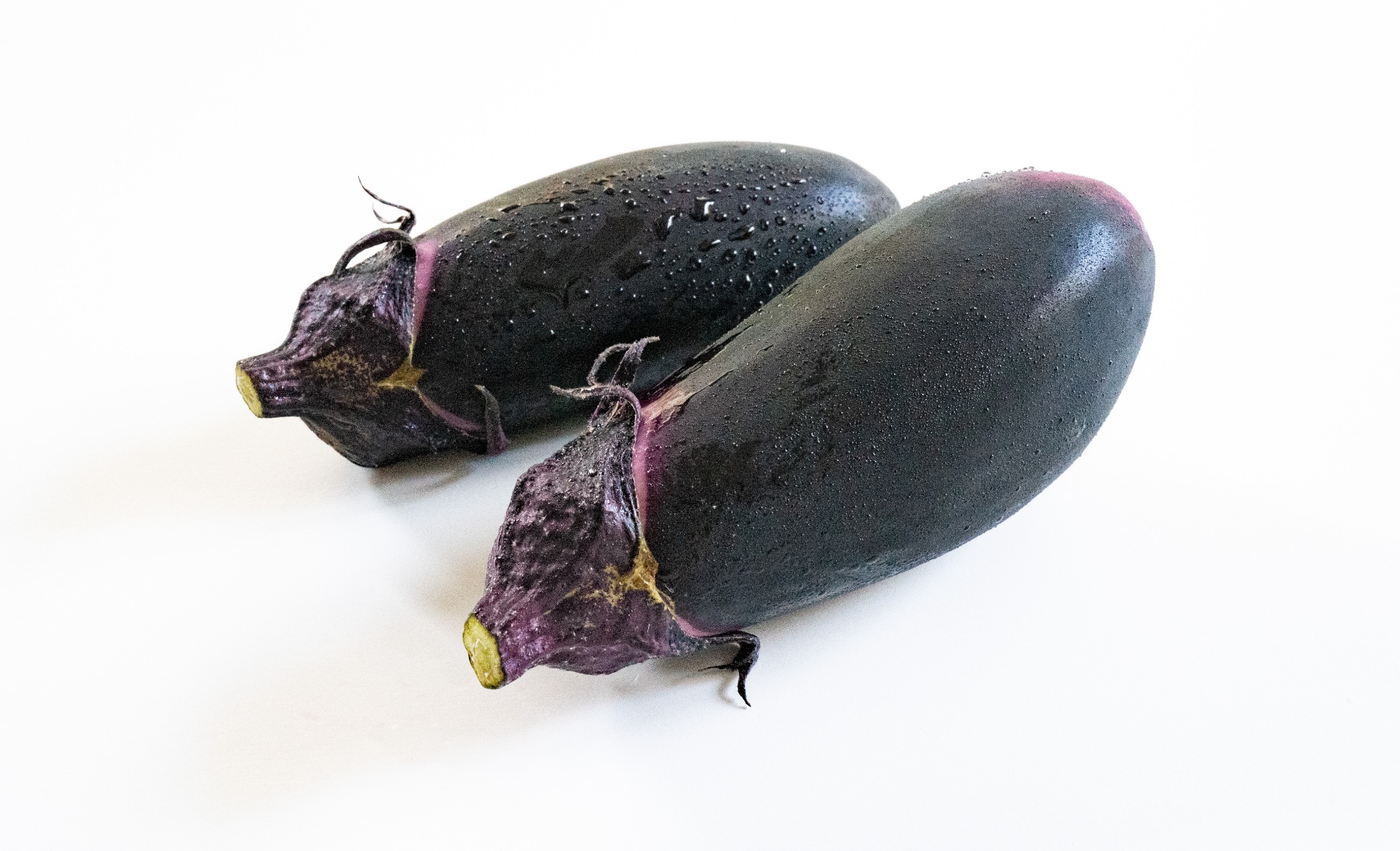
Eggplant is one of Japan’s most beloved vegetables. Its deep, rich purple is so distinctive that in Japanese we even have a name for the color: ”nasukon,” or “eggplant indigo.” This beautiful hue, rarely seen in other vegetables, is part of what makes eggplant so appealing.
Eggplant has been enjoyed in Japan for centuries, and many different varieties are grown throughout the country. In Kyushu, you will find long, slender eggplants, while Kyoto is known for its round varieties, including the famous ”Kamo nasu.” There are a lot of varieties and they come in a remarkable range of shapes and sizes, from slim and elongated to large and round.
Such an abundance of eggplant varieties may be something quite unique to Japan. In many other countries, larger eggplants, similar to what we call ”bei nasu” (American eggplant) in Japan, tend to be more common. One place that particularly surprised me was Brazil, where I also came across smaller eggplants much like those we have in Japan. I was told that Japanese immigrants had brought the seeds with them from Japan.
When cooking eggplant, one of the most important things is preserving that beautiful nasukon color. The purple comes from anthocyanin pigments, which are quite unstable. This is where hot oil works particularly well. Cooking the eggplant briefly in oil helps to set its color, while the oil absorbed by the flesh gives it greater richness and depth of flavor.
In our cooking, we often make use of this characteristic with a technique called ”age-ni”: the eggplant is first deep-fried and then gently simmered in seasoned broth. The pigments in eggplant skin also become more stable when they react with iron, so making fine cuts in the skin with a knife is another small technique that helps preserve its beautiful color.
Care is needed when simmering the eggplant as well. Rather than using a lid, arrange the eggplant in a slightly larger saucepan with just one or two centimeters of simmering liquid. Allow the broth to soak into the eggplant through the cut sides, while keeping as much of the purple skin out of the liquid as possible. In this way, the eggplant absorbs plenty of flavor while retaining the vivid color of its skin.
Once the age-ni is ready, we like to serve it with freshly grated ginger and finely chopped ”asatsuki,” a delicate Japanese green onion. The meltingly tender texture of the eggplant, enriched by the oil, pairs beautifully with the fresh, bright flavor of these garnishes.
As we move toward autumn, eggplant becomes even more delicious. It is one of the pleasures of the coming season, and a wonderful ingredient to enjoy not only for its flavor and texture, but also for its beautiful color.