
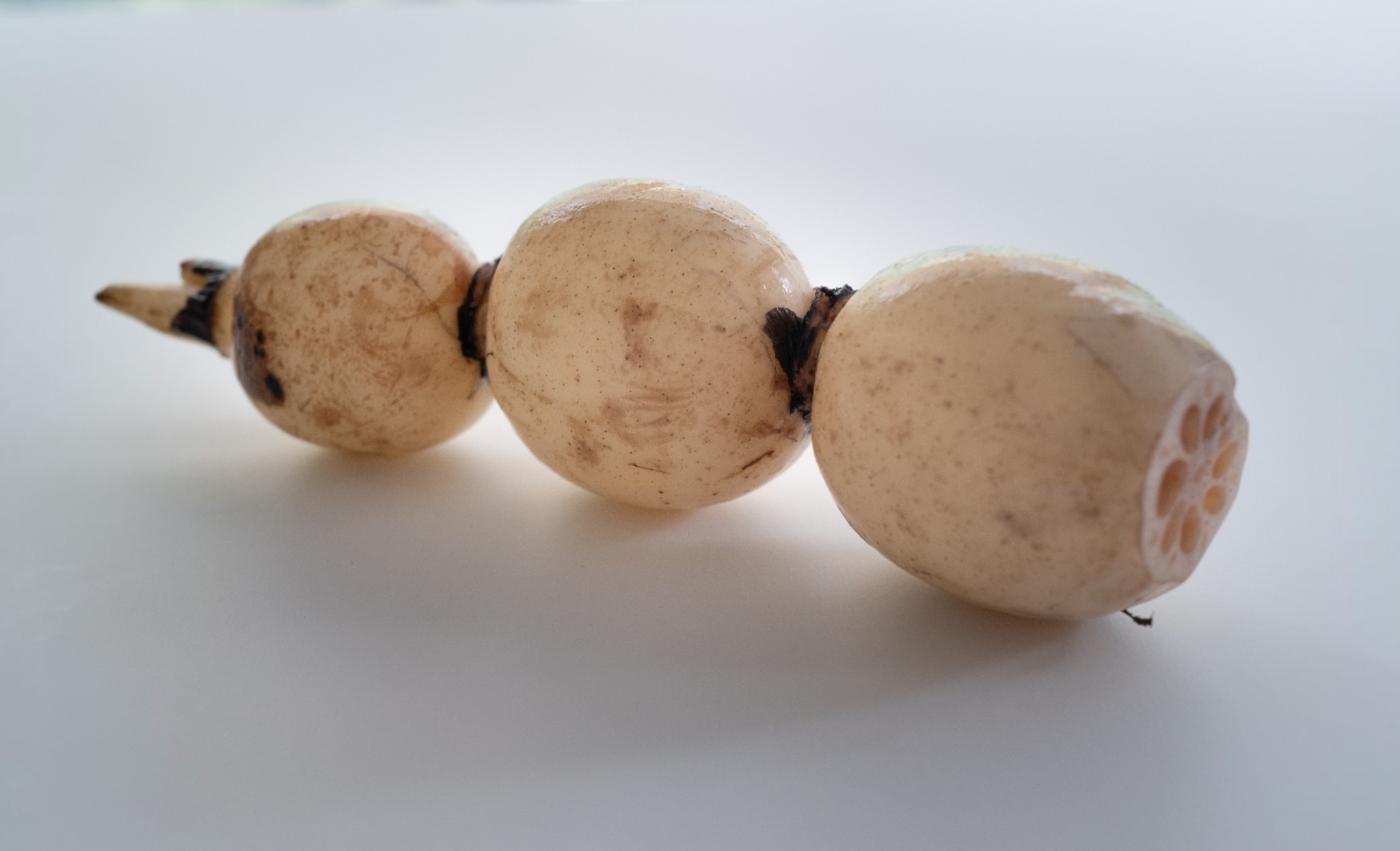
Lotus root is a rather fascinating vegetable, with a few surprises hidden beneath its familiar appearance.
In Japanese, it is called “renkon” (蓮根), which literally means “lotus root.” But despite its name, it isn’t actually a root. It’s the thickened underground stem of the lotus plant.
And then there are those distinctive holes! They aren’t just an interesting pattern. They’re actually air channels that carry oxygen to the part of the plant growing beneath the mud.
Lotus root is grown in fields filled with water. In summer, the plants spread their large leaves and produce beautiful flowers above the water. But the part we eat is hidden deep in the mud below.
Harvesting begins in earnest in autumn and continues through winter. It’s quite a sight to see. Farmers use powerful jets of water to wash away the mud, carefully freeing the lotus roots from the ground. Because several sections grow connected to one another, lifting them out without breaking them takes considerable skill.
Around June, young lotus root, known as “shin-renkon”, begins appearing in markets. It’s tender, juicy, and slightly translucent, and can even be enjoyed raw when thinly sliced. As the lotus root grows larger through autumn and winter, its texture and flavor gradually change.
Different varieties and growing regions also bring their own characteristics. Kaga lotus root, from the Kanazawa region, is known for its particularly sticky texture, while many varieties grown in Ibaraki Prefecture have a wonderfully crisp bite.
Lotus root is often used in simmered dishes, but it also goes beautifully with oil. In dishes such as “chikuzenni”, a traditional Japanese simmered dish, stir-frying the ingredients in oil before simmering brings out a richer flavor.
Personally, one of my favorite ways to enjoy lotus root is “kinpira”.
I cut the lotus root into fairly large pieces and boil them briefly until cooked through. Then I stir-fry them in sesame oil, adding sugar and soy sauce to coat each piece. A sprinkle of “ichimi togarashi” (ground red chili pepper) or “shichimi togarashi” (Japanese seven-spice blend) adds a little kick. The result is wonderfully fragrant, with a satisfying crunch.
Lotus root also has a special place in Japanese New Year celebrations. Because you can see all the way through its holes, it symbolizes the hope for a clear view of the future. This makes it an important ingredient in “osechi ryori”, the traditional dishes enjoyed at New Year.