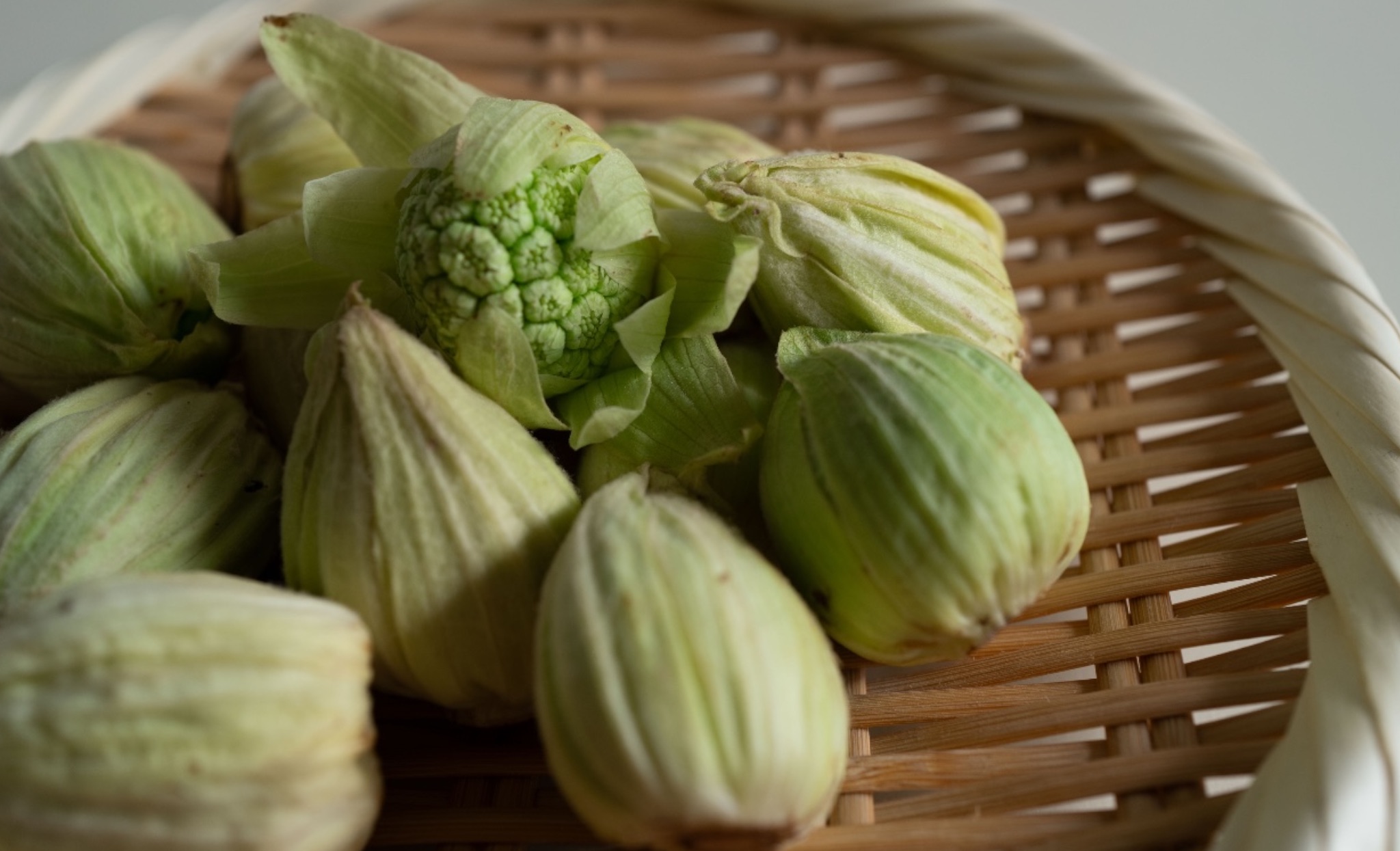
Fukinoto is one of the very first wild vegetables that tells us spring has arrived in Japan. When the ground is still cold, sometimes even covered with snow, these small buds push their way up and quietly signal a change in the season. Just seeing them makes people think, “Ah, spring is coming.”
Fukinoto is actually the flower bud of the Japanese butterbur plant. After the flowers bloom and fade, the leaves grow large, and it becomes what we usually call “fuki.” So fukinoto exists only for a very short time. In Japanese cooking, we really value these brief moments. Eating something that can only be enjoyed for a few weeks is one way we connect food with the seasons.
One thing people often notice right away is that fukinoto is quite bitter. This bitterness has a purpose. When plants first sprout in early spring, there isn’t much food for animals, so bitterness helps protect them. In Japan, we have a saying: “Spring flavors should have bitterness.” Spring food isn’t meant to be completely mild or sweet. That slight sharpness on the tongue is how we feel the energy of new growth after winter.
In Japanese cuisine, the goal isn’t to remove bitterness completely, but to control it. If you remove too much, the taste of spring disappears. If you leave too much, it becomes difficult to eat. Finding that balance is a very important skill for a cook.
When preparing fukinoto, boiling it in water alone isn’t enough to soften the bitterness. Adding a small amount of baking soda to the boiling water helps keep the color bright and gently reduces the harshness. After that, soaking it in water and using it in a light simmered dish works well.Another important idea is the use of oil. Oil has a special role: it wraps around bitterness and changes it into aroma. That’s why oil-based cooking is often used for strong spring vegetables.
For that reason, tempura is one of the easiest and most popular ways to enjoy fukinoto. The batter and hot oil gently coat the bud, making the bitterness softer while still keeping the feeling of spring. Another classic preparation is “fukinoto miso.” The fukinoto is finely chopped and sautéed in oil, then mixed with miso, sugar, and sake until smooth. Just a small amount on hot rice is enough. It’s not meant to be eaten in large quantities, but rather enjoyed slowly, as a seasonal accent. In our January cooking class, this is one of the dishes we prepare to welcome the coming of spring.
Through ingredients like fukinoto, Japanese cuisine teaches us to taste the season itself. Let’s enjoy it!