If you want your daikon to taste truly delicious, there’s a simple traditional trick worth trying: parboiling it in rice-rinsing water.
Daikon, a long white Japanese radish, contains more enzymes than many other vegetables, which means that as it cooks, it can sometimes develop a slightly sharp smell or bitterness. Parboiling it first in rice-rinsing water helps remove that excess bitterness and odor. The result? A softer texture, a cleaner taste, and a gentle natural sweetness. It also helps keep the daikon from falling apart when you simmer it later.
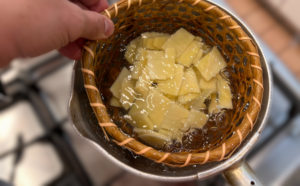
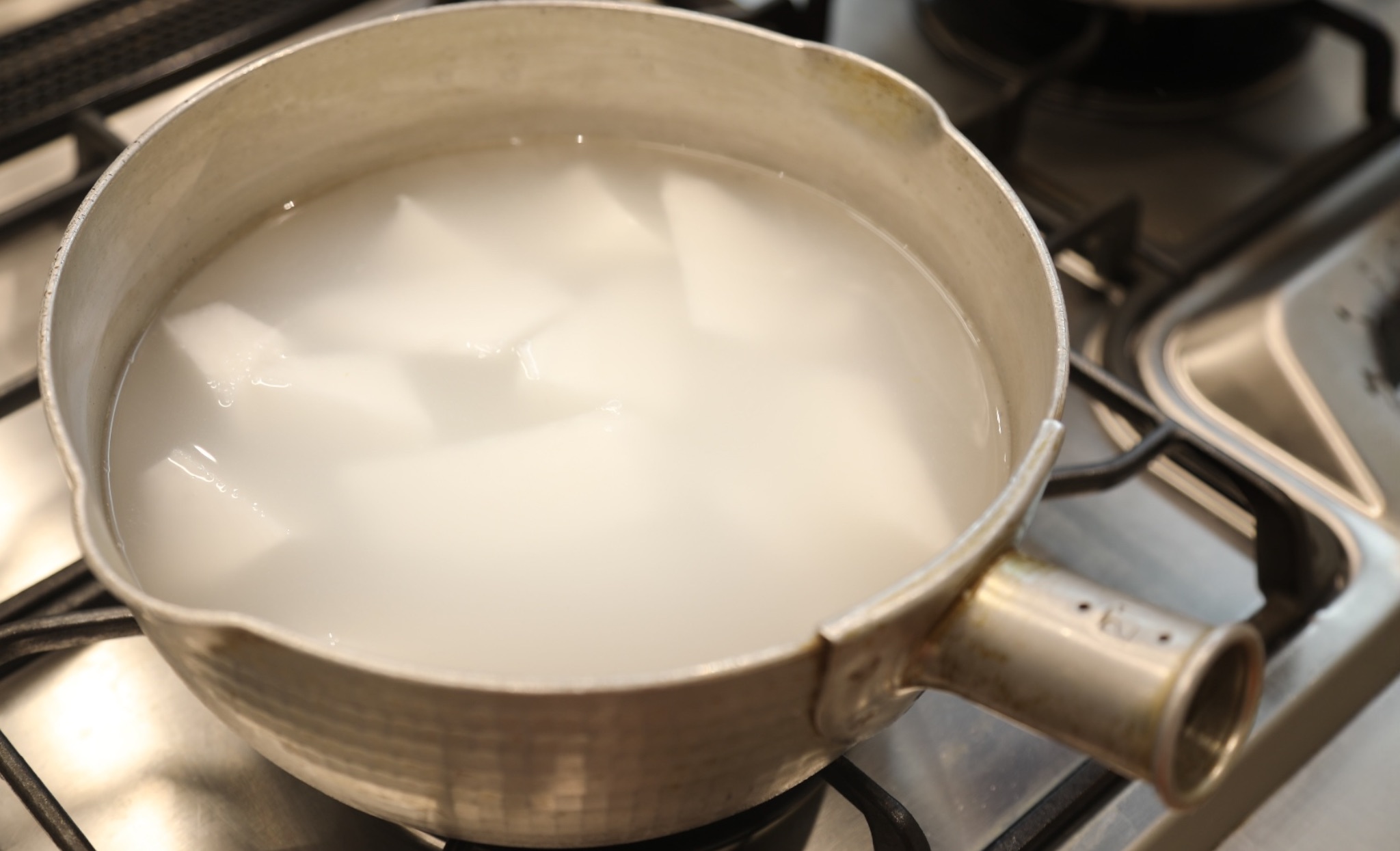
Here’s how to do it. Peel the daikon a little thicker than usual, then place it in rice-rinsing water while it’s still cold. Start heating from cold and bring the temperature up slowly. This gradual heating allows the enzymes to work longer, which helps bring out the daikon’s natural sweetness. Once it reaches a boil, lower the heat and keep it at a gentle simmer. This technique is known as ”yudome,” or controlled simmering.
No rice-rinsing water? No problem. You can add a small handful of uncooked rice to plain water and achieve a similar effect. That said, using rice-rinsing water is more economical and gives the daikon a slightly milder, rounder finish.
After parboiling, you can store the daikon in the refrigerator for a few days as long as it stays submerged in water. Doing this little bit of prep ahead of time makes a big difference—the flavors soak in more easily later, and your simmered dishes will turn out even better.