
As autumn deepens, the leaves on the trees turn brilliant shades of red and yellow. Before long, they begin to fall, drifting in the wind and gathering together on the ground.
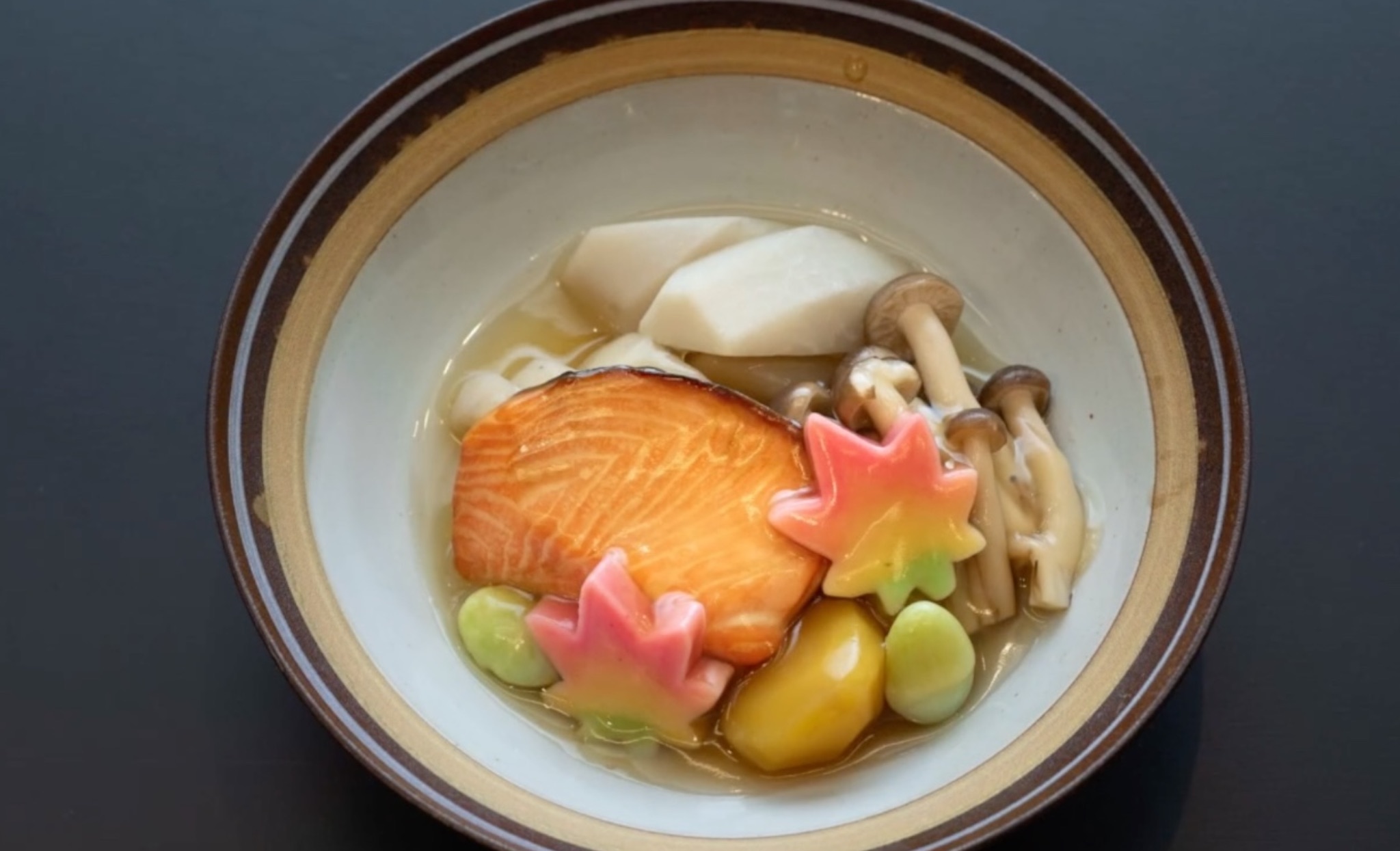
In Japanese cuisine, there is a style of presentation inspired by this beautiful autumn scene. It is called “fukiyose”, meaning “blown together by the wind.”
You might imagine that “fukiyose” refers to a particular dish, but that isn’t quite the case. Rather, it is a way of expressing the beauty of autumn through the choice of ingredients, their colors and shapes, and how they are arranged on a plate.
There are many ways to bring this idea to life.
One example is “fukiyose-ni”, a simmered dish made with five or six different ingredients, such as taro, shiitake mushrooms, and tilefish. Each ingredient is prepared and seasoned separately to bring out its own flavor, then arranged together in a bowl. A warm, lightly thickened sauce is poured over them, creating a comforting dish that is especially welcome as the weather grows colder.
The ingredients can also suggest elements of the autumn landscape. Pale taro might evoke snow settling on a mountain, while mushrooms bring to mind the quiet beauty of the wooded hills. Each ingredient becomes a small part of the seasonal scene.
But “fukiyose” is not limited to simmered dishes.
In “fukiyose-age”, ingredients of different colors and shapes are deep-fried and arranged together. The same idea can also be incorporated into “hassun”, a course in traditional Japanese cuisine featuring a selection of small, beautifully presented dishes. When these colorful elements are gathered on a plate, they create a scene reminiscent of autumn leaves scattered and brought together by the wind.
This way of expressing the seasons through food is nothing new.
The idea of “fukiyose” can be found in Japanese cookbooks dating back to the Edo period (1603–1868). Historical examples include preparations using tofu with green laver seaweed, as well as dishes made with konjac.
The ingredients and techniques may have been quite different from those we use today. Yet the desire to capture the feeling of a season through familiar ingredients seems to have remained much the same.
In Japanese cuisine, creating a sense of the season does not always require rare or elaborate ingredients.
The colors and shapes of everyday foods, the way they are combined, and how they are arranged in a serving dish can all become ways of expressing nature. With a little thought and creativity, a single plate can evoke the landscape of an autumn hillside.
Like fallen leaves gathered by the wind, different ingredients come together in “fukiyose”, each contributing its own color, flavor, and character.
It is a lovely example of how Japanese cuisine brings the changing seasons to the table, inviting us to appreciate them with both our eyes and our palate.