In Japan, many everyday bowls—like rice bowls and soup bowls—have a slightly raised ring on the bottom.
If you’re used to Western tableware, you might not have noticed this detail before, since many dishes outside Japan don’t have this feature. So why is it so common in Japanese bowls?
In this article, I’ll introduce this small but important detail, known as ”itozoko” or ”kodai”—the foot ring or the raised base. It may seem minor, but it reflects a lot about Japanese food culture and aesthetics.
What Is “Itozoko”? And How Is It Different from “Kodai”?
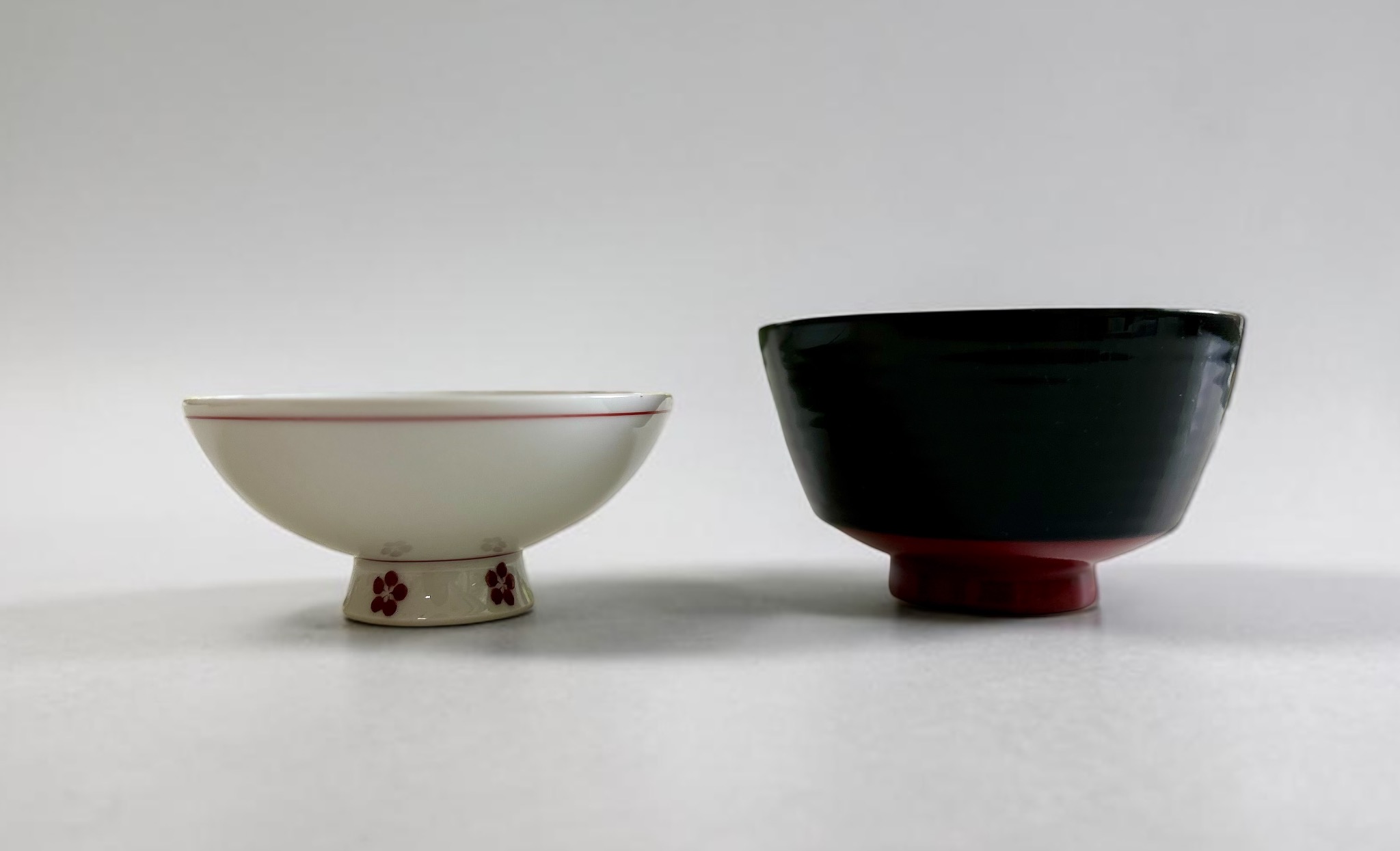
Take a look at a typical Japanese rice bowl. You’ll notice a slightly raised ring on the bottom—this is called ”itozoko.”
To understand the term, it helps to look at how pottery is made. Clay is kneaded, shaped on a spinning potter’s wheel, and once the form is complete, it’s cut off from the wheel using a thin wire. That’s where the name comes from—”ito” means “string,” so itozoko literally means “string-cut base.”
In pottery, this part is often called itozoko, while in lacquerware it’s more commonly referred to as ”kodai” (foot or base). In practice, both refer to the raised part on the bottom of a vessel.
While some dishes in other cultures also have a foot, it’s far more common—and more pronounced—in Japanese tableware. So why did this feature develop so strongly in Japan?
A Dining Culture of Holding the Bowl
One key reason lies in Japan’s unique dining style: holding bowls in your hands while eating.
In Japan, it’s common to lift a bowl—whether it’s rice or soup—and bring it close to your mouth while eating with chopsticks. This feels completely natural in Japan, but it’s not a common practice in many other parts of the world.
In Western cultures, dishes usually stay on the table, and people eat with forks and spoons. In China and Korea, a spoon is often used together with chopsticks, so there’s less need to bring the bowl to the mouth.
Historically, Japan also used spoons up until around the Heian period (roughly the 8th to 12th centuries). Over time, however, people began using only chopsticks, and it became common to drink soup directly from the bowl.
As this style of eating became standard, there was a need for bowls that were easy to hold and comfortable to use—even when hot. This led to the development of the raised base.
A Small Detail with Big Functions
The itozoko or kodai isn’t just decorative—it serves several practical purposes.
1. Stability
A completely flat-bottomed bowl can easily wobble if there’s even a slight distortion. A raised base reduces the contact area with the table, making it easier to stabilize the bowl.
It also helps during firing. Without a raised base, air can get trapped underneath, increasing the risk of cracking in the kiln.
2. Lightness
By trimming the base, the overall weight of the bowl becomes lighter.
Since Japanese bowls are often picked up and held while eating, lightness is an important feature. In lacquerware especially, artisans carefully shape the wooden core to be thin and elegant while maintaining strength.
3. Less Heat Transfer
When hot soup is served, the bowl itself can become very hot.
A raised base reduces the area that touches your hand, making it easier to hold. This allows you to comfortably enjoy hot dishes like miso soup.
Functional Beauty in a Small Detail
The raised base is only about a centimeter high, but it brings together stability, lightness, and ease of use.
At the same time, it enhances the overall silhouette of the bowl, giving it a refined and elegant appearance.
In this way, the itozoko or kodai represents a balance between practicality and beauty—something that is central to Japanese design.
In Closing
Next time you come across a Japanese bowl, take a moment to look at its base.
Even a small detail like this reflects a long history and thoughtful craftsmanship.
If you gently trace the base with your fingers, you might start to see the bowl in a new light.
Taking the time to notice these details is part of the joy of exploring Japanese food culture.