
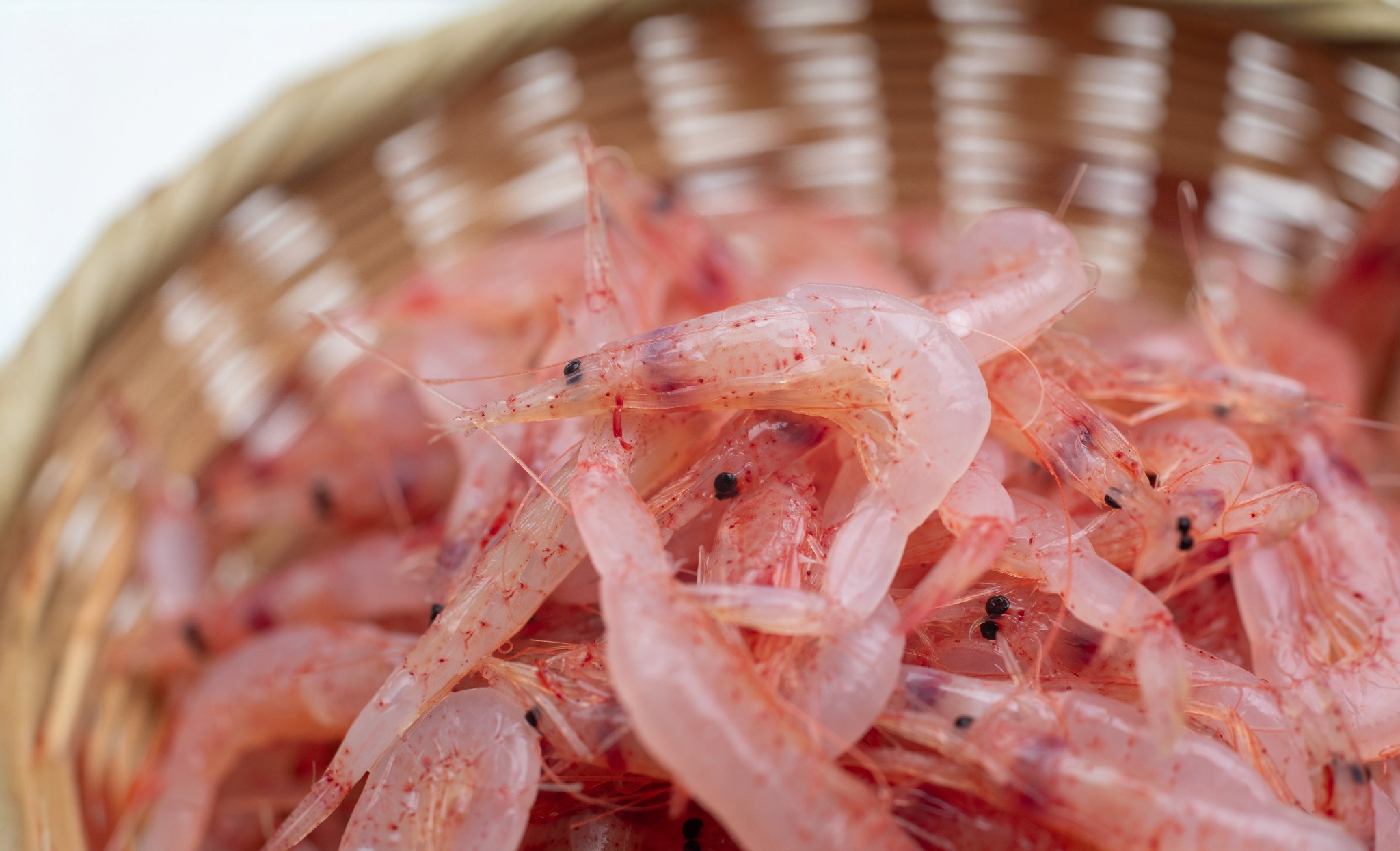
Sakura shrimp are a spring delicacy in Japan, known for their beautiful pink color and rich, aromatic flavor. They are quite rare outside Japan, which makes them a special seasonal ingredient even within Japan.
What makes them even more special is how their flavor is enhanced through traditional processing methods. Right after they’re caught, the shrimp are quickly boiled in seawater—this is called kama-age (lightly boiled fresh catch). This step removes any unwanted flavors and gives them a clean, delicate taste. After that, they are spread out and dried under the sun. As they soak up plenty of sunlight, their color deepens into a vibrant red, and their natural umami becomes more concentrated.
Along riverbanks like the Ōi River in Shizuoka, you can see rows of shrimp laid out to dry, creating a stunning view that looks almost like a “red carpet.” It’s a well-known seasonal sight that marks the arrival of spring in the region.
This year’s catch seems to be going well, but in recent years, there have been seasons when the harvest was unstable. One of the main reasons is believed to be changes in sea temperature. As water temperatures shift, the timing of growth and spawning can also change, sometimes making it difficult for fishermen to go out, and as a result, sakura shrimp can become harder to find.
Another charm of sakura shrimp is that you can eat them whole. When cooked, their aroma really opens up and becomes even more appealing. For example, ”kakiage” (a type of crispy mixed tempura) made with new-season onions and sakura shrimp has a light, crunchy texture and a wonderfully toasty flavor. Or try them simmered with seasonal bamboo shoots—this simple dish lets the gentle, savory taste of the shrimp slowly come through.